
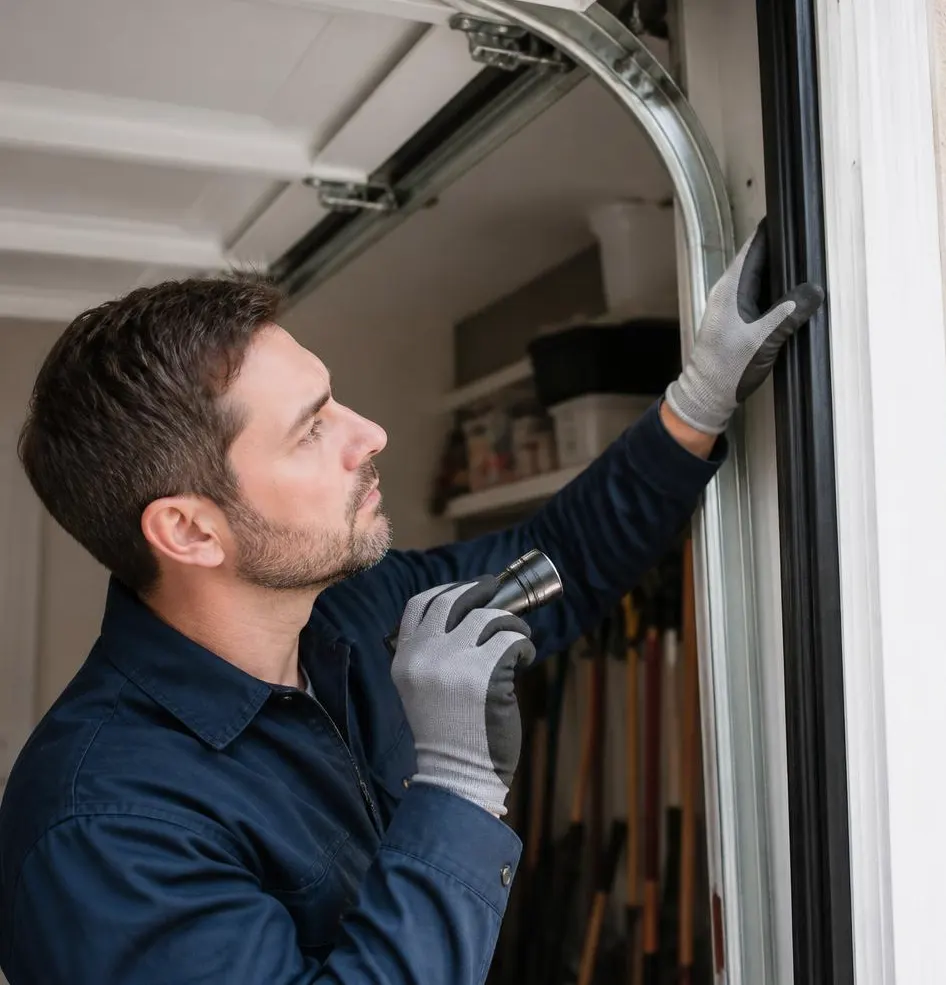
The Moment You Notice Something's Off
You pull into the driveway, hit the opener, and the door doesn't move the way it used to. Maybe it jerks instead of gliding. Maybe there's a new grinding noise, or the door hangs a little crooked at the bottom before it finally seats. Most homeowners don't think about their garage door springs until one of these small moments catches their attention — and that instinct is worth trusting. Springs rarely fail without warning. They tell on themselves first, usually for weeks, sometimes months.
Here's a walk-through checklist you can do right now, from inside your own garage, to figure out whether your springs are on borrowed time.
First, Know What You're Looking At
Most garage doors in this area use one of two spring setups: a torsion spring mounted horizontally on a shaft just above the closed door, or a pair of extension springs running along the horizontal tracks on either side, above the top rollers. Torsion springs are more common on newer or heavier doors; extension springs show up on a lot of older installations. Knowing which one you have tells you where to look.
Walk the Checklist
1. A visible gap in the torsion spring coils
Look at the spring above the door. If you see a clean gap where the coils have separated, that spring has already broken. If it hasn't separated but looks stretched thinner in one spot than the rest, it's weakening there and that's usually where it will eventually give.
2. The door closes crooked or sits unevenly
If one side of the door dips lower than the other as it closes, or the door looks tilted when fully down, one spring (or one side of a torsion system) is doing more work than the other. That imbalance accelerates wear on whichever spring is compensating, and it also puts extra strain on the opener.
3. A loud bang you heard recently, even if the door still works
Torsion springs are under enough tension that when they fail, they don't fray quietly — they snap with a bang loud enough to hear through the house. If you've heard that sound in the last few weeks and the door still opens, assume one spring is gone and the other is now carrying the full load alone. It won't last long under that stress.
4. The opener strains, grinds, or slows down
Listen to the motor itself. A healthy opener lifts a properly sprung door with a smooth, steady hum. If you're hearing a labored grind, a hesitation partway through the cycle, or the door now takes noticeably longer to open, the springs aren't doing their share of the lifting anymore and the motor is compensating.
5. The manual lift test feels heavy
Disconnect the opener (pull the red release cord) and lift the door by hand about halfway. A door with good springs should stay roughly where you let go, or drift only slightly. If it slams down or feels like dead weight, the springs have lost enough tension that they're no longer counterbalancing the door's actual weight — a real risk if it later falls unexpectedly.
6. Rust, flaking, or pitting on the coils
Run your eyes over the full length of the spring. Surface rust, flaking metal, or small pits are signs of corrosion weakening the steel from the outside in. This matters more here than in drier climates: winter road salt tracked in on vehicles, combined with humid summers and big temperature swings, speeds up corrosion on any exposed hardware in an unheated garage. A rusted spring can fail well before its expected lifespan.
7. Extension springs that look overstretched
If you have extension springs, check whether the coils look permanently elongated even when the door is closed and the spring should be at rest. A spring that doesn't return to a compact coil shape has lost elasticity and is on its way to a fatigue failure.
8. A rhythmic squeak or grind during the full cycle
Occasional noise is normal on an older door. A consistent squeak or grind that happens at the same point in every open-and-close cycle often means metal-on-metal wear at the spring's mounting point or on the shaft, which accelerates fatigue failure.
9. Cables look loose or frayed near the bottom drum
The cables and springs work as a system. If a cable looks slack, frayed, or off-track near the drum at the end of the torsion shaft, it's often a sign the spring tension has already shifted out of balance.
What Not to Do
If any of these show up, don't try to adjust, tighten, or remove the spring yourself. Torsion springs especially store enough energy to cause serious injury if they release suddenly, and extension springs without properly installed safety cables can do the same. This is one repair where the DIY math doesn't favor you.
When to Call Lucasville Garage Door
If you've spotted a gap in the coils, a crooked close, a heavy manual lift, or visible rust, it's time to call. We handle Spring Replacement for both torsion and extension systems, and we can pair it with a full Garage Door Maintenance visit to check cables, rollers, and hardware while we're already under the hood — especially useful heading into winter, when cold snaps put extra strain on tired springs.
If your garage door in Lucasville, Portsmouth, Wheelersburg, or anywhere else in Scioto County is showing any of these signs, call Lucasville Garage Door today and get it looked at before the spring decides for you.