
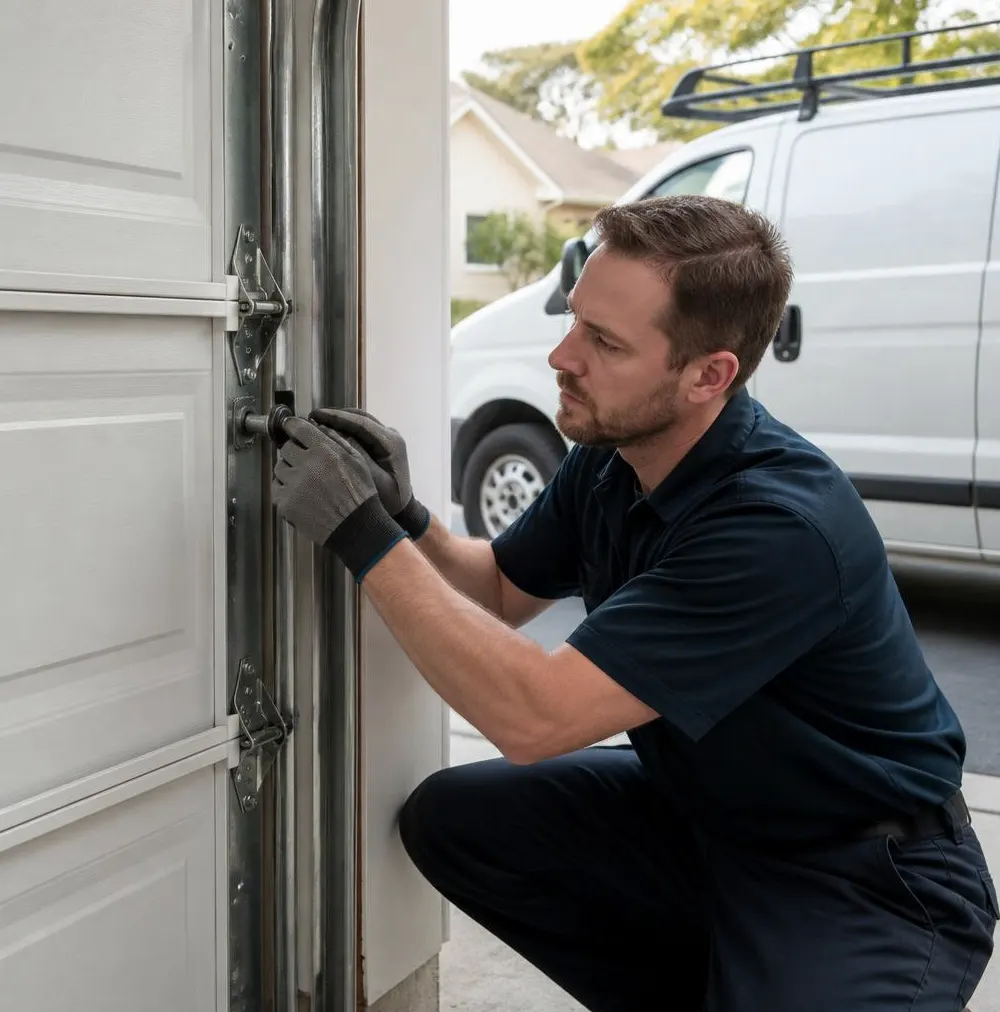
Wait until the first hard freeze to think about your garage door, and you'll likely be thinking about it from your driveway, in the cold, trying to figure out why it won't budge. A garage door that's been running on worn rollers and dried-out lubricant all summer doesn't fail gently — it fails on the coldest morning of the year, usually right when you're already late. Springs that have lost a little tension become springs that snap under the extra load of a cold, stiff door. A $150 fall tune-up is a lot cheaper than an emergency spring replacement call in the middle of a January cold snap.
What Cold, Ice, and Road Salt Actually Do to a Garage Door
Scioto County winters aren't mild. Repeated freeze-thaw cycles, road salt tracked in on tires, and ice buildup around the bottom seal all put real stress on a garage door system. A few things happen every year to doors that didn't get fall attention:
- Lubricant thickens or washes away. Cold makes old grease stiff and slow, which forces the opener motor to work harder on every cycle.
- Metal contracts. Tracks that were slightly misaligned in summer heat can bind or pop a roller loose once temperatures drop.
- Salt and moisture corrode hardware. Hinges, springs, and track bolts exposed to salty slush can rust, especially on doors facing the street-side splash zone.
- Weatherstripping cracks. Rubber seals that were fine in July turn brittle in freezing temps, letting in drafts, snow, and small animals looking for shelter.
- Ice forms at the bottom seal. Water that pools near the door and refreezes can actually weld the door to the slab overnight.
The Fall Checklist Before Temperatures Drop
1. Lubricate the moving parts
Rollers, hinges, and the torsion spring itself should get a light coat of garage-door-specific lubricant (not WD-40, which washes out rather than protects) before the cold sets in. This keeps motion smooth and reduces strain on the opener and the springs.
2. Inspect the springs now, not in January
Springs lose tension over years of cycling, and cold makes a weak spring work harder than it should. Look for visible gaps in the coils, rust, or a door that feels unusually heavy when lifted manually (with the opener disconnected). A spring that's already marginal in October is a strong candidate to fail during the first real cold snap.
3. Replace worn weatherstripping
Run your hand along the bottom seal and side stops. If the rubber is cracked, flattened, or pulling away from the track, replace it before winter. This single step does more to block drafts and keep ice from forming under the door than almost anything else.
4. Check the auto-reverse safety feature
Cold-weakened sensors or a misaligned photo-eye can fail intermittently, and that's a safety issue, not just an inconvenience. Place a piece of wood on the ground where the door closes — it should reverse immediately on contact. Test it now while it's easy to fix.
5. Clear and inspect the tracks
Dirt, leaves, and spring-and-summer debris build up in the tracks over the year. Wipe them down and check for bends or gaps where rollers could jump loose when metal contracts in the cold.
6. Look at the opener's battery backup
Winter storms knock out power, and an opener without a working battery backup means lifting a heavy door by hand in the cold. If the backup battery is more than a couple years old, test it or replace it now.
Why the Seasonal Swing Matters Here
This part of Ohio doesn't ease into winter — humid summers give way fast to icy, salt-covered roads, then back to spring storms and the occasional tornado watch a few months later. That swing is hard on garage doors specifically because materials expand and contract repeatedly through the year. A door and opener system that isn't maintained seasonally accumulates small problems that compound: a slightly loose bolt becomes a rattling track, a slightly weak spring becomes a snapped one, a slightly worn seal becomes an ice dam. Homeowners who do a quick inspection each fall tend to avoid the expensive, all-at-once failures that hit everyone else in February.
When to Call Lucasville Garage Door
If your door is sagging on one side, making a grinding noise when it opens, or the opener strains and reverses on its own, don't wait for it to get worse in the cold. Those are classic signs of spring or cable wear, and a technician can usually spot which one before it becomes a dangerous situation. Lucasville Garage Door handles both quick fixes and full seasonal prep — our Garage Door Maintenance service covers lubrication, hardware tightening, and a safety inspection, while our Spring Replacement service addresses the single most common cause of winter garage door emergencies across Lucasville, Portsmouth, Wheelersburg, and the rest of Scioto County. We also handle Cable & Track Repair for doors that are starting to bind or jump their rails as temperatures drop.
If your garage door hasn't had a real look-over since last spring, now's the time. Call Lucasville Garage Door today to schedule a pre-winter inspection and keep your door — and your family — working safely all season.